
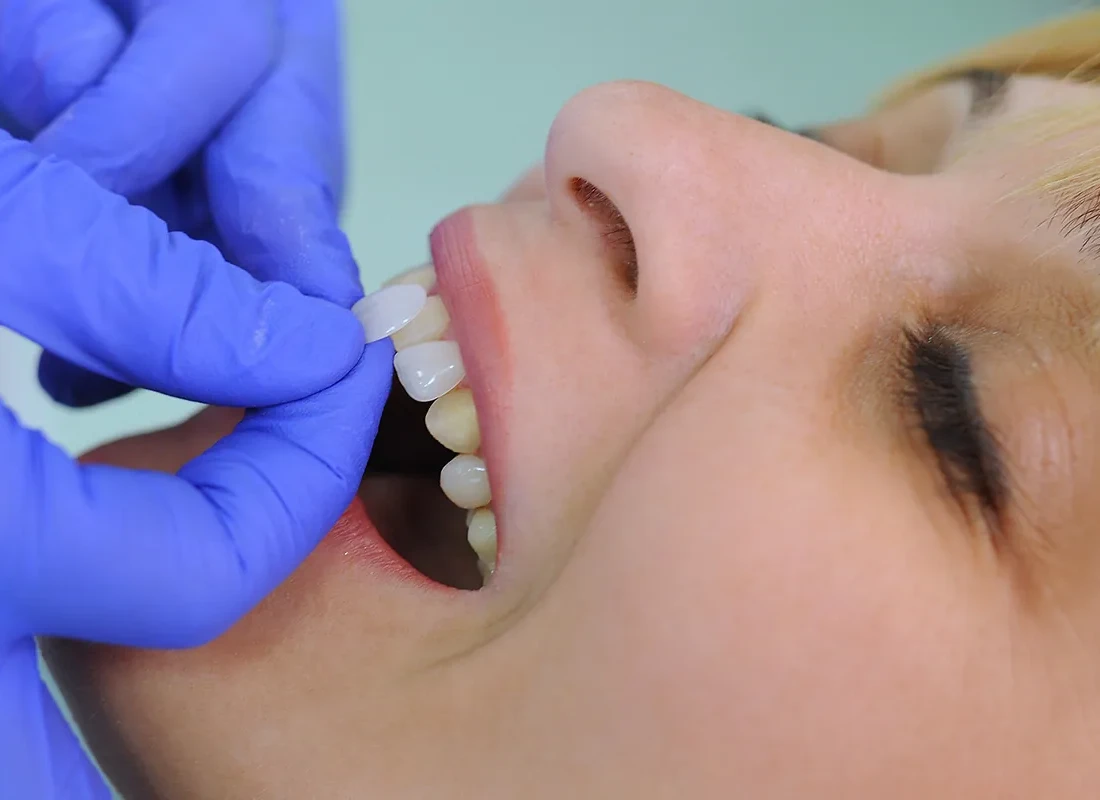
Are veneers right for me? They are a good fit when the teeth underneath are healthy, the bite is gentle and the goal is something a thin shell can deliver. A few simple checks sort out most cases before treatment starts.
A veneer is a custom-made covering that bonds to the front surface of a tooth to change its color, shape or length. Plenty of people start asking about veneers while looking at a chipped edge, a stubborn stain or a small gap. Most of the checks below are about the tooth underneath, not how the smile looks today.
Quick Answer
Veneers are right for you when your teeth and gums are healthy, your bite is gentle, your goal is cosmetic and you accept that placing most porcelain veneers removes a thin layer of enamel. Decay, gum disease, heavy grinding or a goal beyond the surface of the tooth can mean another treatment fits better.
Key Takeaways
- Veneers can hide chips, stains, crooked or misshapen teeth and small gaps on front teeth.
- Decay and gum disease need treatment first, because veneers over unhealthy teeth may worsen problems.
- Clenching, grinding or a deep overbite can make a veneer a poor choice for some patients.
- Enamel is removed to place a porcelain veneer, so the change cannot be reversed later.
Which Smile Concerns Can a Veneer Fix?
A veneer is built for cosmetic problems on the visible surface of a tooth. According to MouthHealthy from the American Dental Association, veneers can improve teeth that are chipped or broken, stained, crooked or misshapen, and they can mask gaps in a smile. They differ from crowns because they cover only the front of a tooth rather than the entire structure.
A useful first question is what bothers you most in the mirror, and whether it sits on the surface of the tooth. One discolored tooth, a worn edge and a slightly uneven smile line are all problems a thin shell can handle. A tooth that is cracked deep below the surface or badly decayed needs a different treatment, since a thin shell is not meant to hold a weakened tooth together.
Are the Teeth and Gums Healthy Enough?
A veneer is only as stable as the tooth underneath it. Decay and gum disease have to be treated first, because placing veneers over unhealthy teeth may worsen existing problems.
A dental exam shows where those problems are. X-rays can reveal decay between teeth or under old fillings, and the gums are checked for signs of disease. Treating what is found first gives the veneer a healthy base to bond to.
Does Grinding or Clenching Rule Out a Veneer?
It can rule a veneer out, and at the least it changes the plan. Clenching, grinding or a deep overbite can make veneers a poor choice, because a veneer may chip, crack, wear down or loosen over time. The same force that wears down natural enamel acts on a thin shell too.
A person can grind without knowing it, and morning jaw soreness or flattened tooth edges can be clues. The dentist checks the bite and the wear pattern to decide whether a veneer will last.
Can a Veneer Be Reversed?
Most porcelain veneers cannot be reversed. Placing one starts with removing a small amount of enamel from the front and sides of the tooth, and enamel does not grow back. MouthHealthy states plainly that the treatment is not reversible, which is why it gets its own question here.
The real test is whether the tooth would look acceptable if the shell ever had to be replaced. A veneer may need to be re-bonded, repaired or replaced over time, so more work later is a real possibility. Anyone who would be unhappy with the tooth after the enamel is removed, or with replacing the veneer later, should weigh both before starting.
Should the Material Be Porcelain or Composite?
The two main types are porcelain and composite, and each has trade-offs. A porcelain veneer is a thin shell custom-made to fit the front of a tooth. It is strong, long-lasting and natural-looking, and it tends to be the more expensive option.
A composite veneer is made from tooth-colored filling material bonded to the tooth. It may need less enamel removed and fewer visits, and it takes less work to repair. Composite is also less resistant to stains and wear than porcelain. The dentist can explain which material suits the tooth, the bite and the goal.
Who Should Place a Veneer?
Only a licensed dentist should place one. The American Dental Association has warned about “veneer technicians” who offer services without a dentist involved. Unlicensed providers may place veneers over unhealthy teeth without knowing it, and the risks include infection and nerve damage.
A licensed dentist checks the health of the tooth, the bite and the choice of material together, which is the reason the work belongs with a dentist.
Will Insurance Cover a Veneer?
Coverage depends on the reason for the treatment. Veneers are considered cosmetic dentistry, so a plan may not pay for them unless the treatment is deemed medically necessary. Plans differ, so the insurer’s own answer is the only reliable one.
Asking the insurer before the consultation, and asking the office for a written estimate, makes the cost easy to plan around.
Frequently Asked Questions
Can I see how veneers will look before treatment?
Some practices offer a digital preview that shows the proposed shape and shade before any enamel is touched. Ask if your consultation includes one. A preview lets you judge size, shape and color while changes are still easy to make, so you can raise concerns before the work begins.
How long does it take to get used to a veneer?
It can take a few days to get used to a veneer. A bite that does not feel right afterward can be corrected, so tell the dentist if something feels off instead of waiting it out.
How do I care for veneers once they are placed?
Brush with fluoride toothpaste twice a day and clean between the teeth daily. Cavities can still form under or around a veneer, and those habits protect the edges where the shell meets the tooth. Regular dental checkups let the dentist watch the veneers and the teeth beneath them.
Related Reading
To talk through your own smile goals, visit our veneers in Laguna Niguel, CA page or schedule a consultation.