
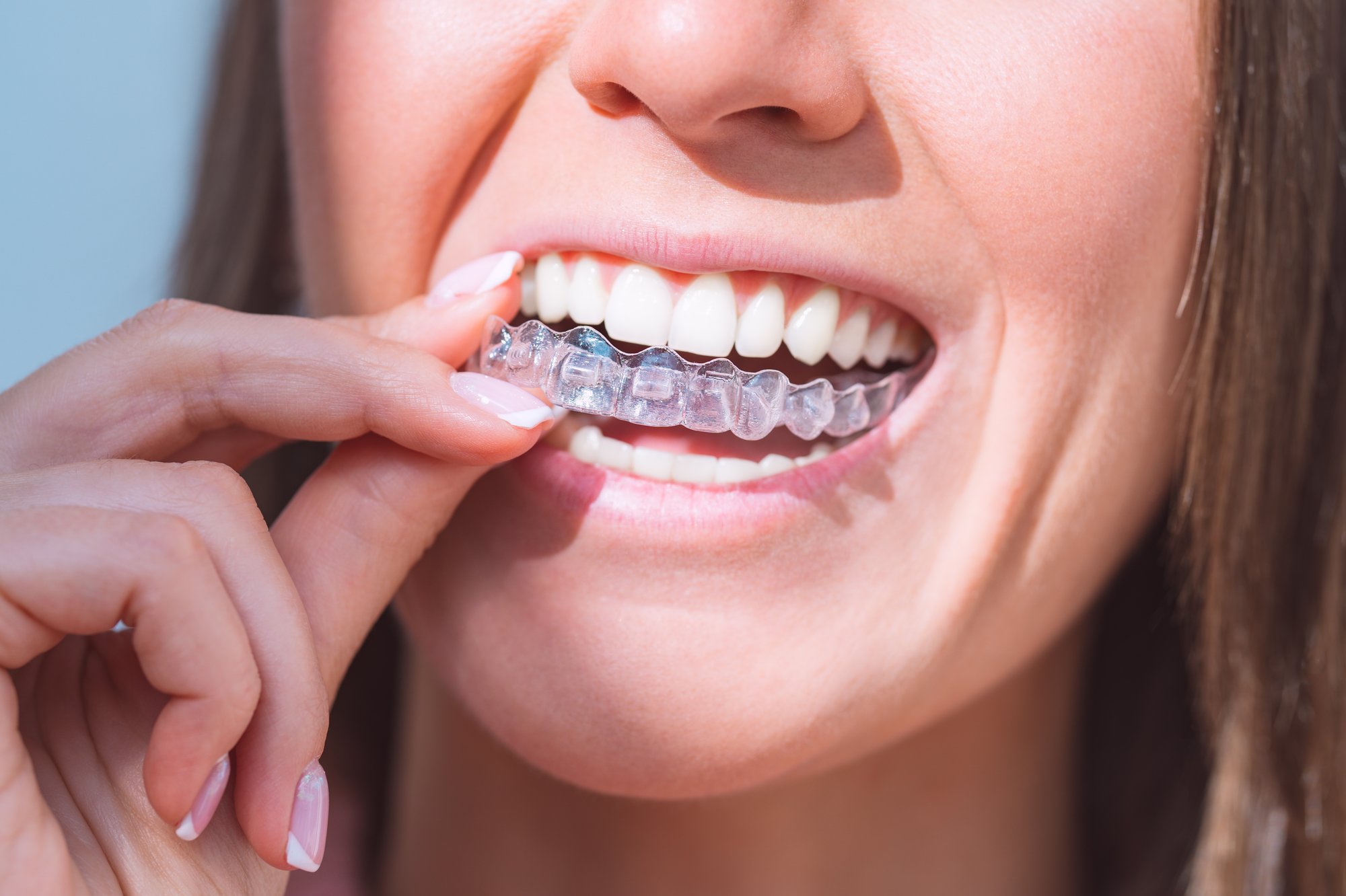
Considering clear aligners but want a realistic sense of the commitment before you start? The range is narrower than you might expect. Most adults need somewhere between 12 and 18 months of Invisalign, and the Invisalign treatment plan is mapped out digitally before your first tray goes in. Invisalign is a system of clear, removable aligners that move teeth gradually into better position. What determines your particular timeline is how far your teeth need to travel and how consistently you wear the trays.
Key Takeaways
- Most adult cases finish somewhere in the 12 to 18 month range.
- Minor spacing or crowding can sometimes be corrected in six months or less.
- Complex rotations and bite corrections push treatment past the typical range.
- Wearing aligners 20 to 22 hours daily is what keeps the estimate accurate.
- Your provider produces a projected timeline from a digital scan before you begin.
What Is the Typical Range for Adults?
Twelve to eighteen months covers the majority of adult cases. On the shorter end, mild crowding or a small gap between the front teeth can resolve in six to nine months, sometimes less. On the longer end, cases involving significant rotation, substantial spacing, or bite correction can run two years or beyond.
Adults occasionally take slightly longer than teenagers with comparable alignment issues, because bone remodels more slowly with age. That difference is measured in weeks rather than years, though, and it rarely changes whether someone is a good candidate. Adults now make up a sizeable share of aligner patients.
What Determines Your Personal Timeline?
Distance is the main factor. A tooth that needs to shift a fraction of a millimeter finishes quickly; one that needs rotating into an entirely new position takes considerably longer. The number of teeth being moved matters too, as does whether your bite requires correction alongside the alignment itself. Existing dental work can influence the plan, since crowns and bridges do not respond to aligner pressure the way natural teeth do. Your provider accounts for all of this when building the treatment plan, which is why the estimate you receive is specific to your mouth rather than a general average.
How Is the Estimate Calculated?
It comes from a digital model, not a guess. A scan of your teeth is used to build a three-dimensional simulation that maps every planned movement in sequence, from your starting position to the final result. That simulation determines how many aligner sets you need, and since each set is typically worn for one to two weeks, the number of trays translates directly into a number of months.
You usually get to see the projected outcome on screen before committing to anything. It is one of the more useful parts of the consultation, because you know the expected length upfront rather than discovering it as you go. Seeing the projected result also gives you a clearer basis for the decision.
Does Wear Time Really Affect the Length?
It affects it more than any other factor within your control. According to the American Association of Orthodontists, clear aligners are removable and should be worn 20 to 22 hours a day for the best results. Falling short of that window means teeth do not finish moving before you advance to the next tray, which throws off the sequence the plan depends on. Chronic under-wearing is the most common reason treatment stretches past the original estimate. Anyone asking how long Invisalign takes should understand that the answer partly depends on them.
What Can Extend Treatment?
Refinements are the usual reason. Toward the end of a case, it is common for a few teeth to sit slightly off from the projected result, and a short additional series of aligners corrects the difference. This is normal, not a sign anything went wrong, and it typically adds one to three months. Attachments may be added or adjusted along the way as well. Occasionally a tooth simply moves more slowly than predicted, and the plan gets revised to accommodate it. Lost or damaged trays can add time as well, though replacements are usually quick to order.
What Happens When You Finish?
Active treatment ends, but the maintenance phase does not. Teeth naturally drift back toward their original positions, and retainers are what prevent that. Most people wear them full time for a short stretch after the final aligner, then switch to nights indefinitely. Skipping retainers is the single most common reason results fade over the following years. Building that habit into the end of treatment protects the months you just invested.
Planning Around a Realistic Timeline
For most adults, Invisalign takes 12 to 18 months, with straightforward cases finishing sooner and complex ones running longer. The actual figure depends on how far your teeth must move, whether your bite needs work, and how consistently you keep the trays in. Your Invisalign treatment time is projected from a digital scan before you start, so you go in knowing roughly what to expect.
If you want to learn more about how many months of Invisalign adults need, visit our Invisalign in Laguna Niguel, CA page or schedule a consultation.